
Soulbound Fibre Guide — Foraging, Manufacturing & Profit
Fibre is the most common raw material you’ll never go looking for — you’ll just end up with a pocketful of it after any foraging session. If you’ve wondered what all those extra plant drops are actually worth, here’s everything the official wiki documents about Fibre, organized for players who think in gold per hour.
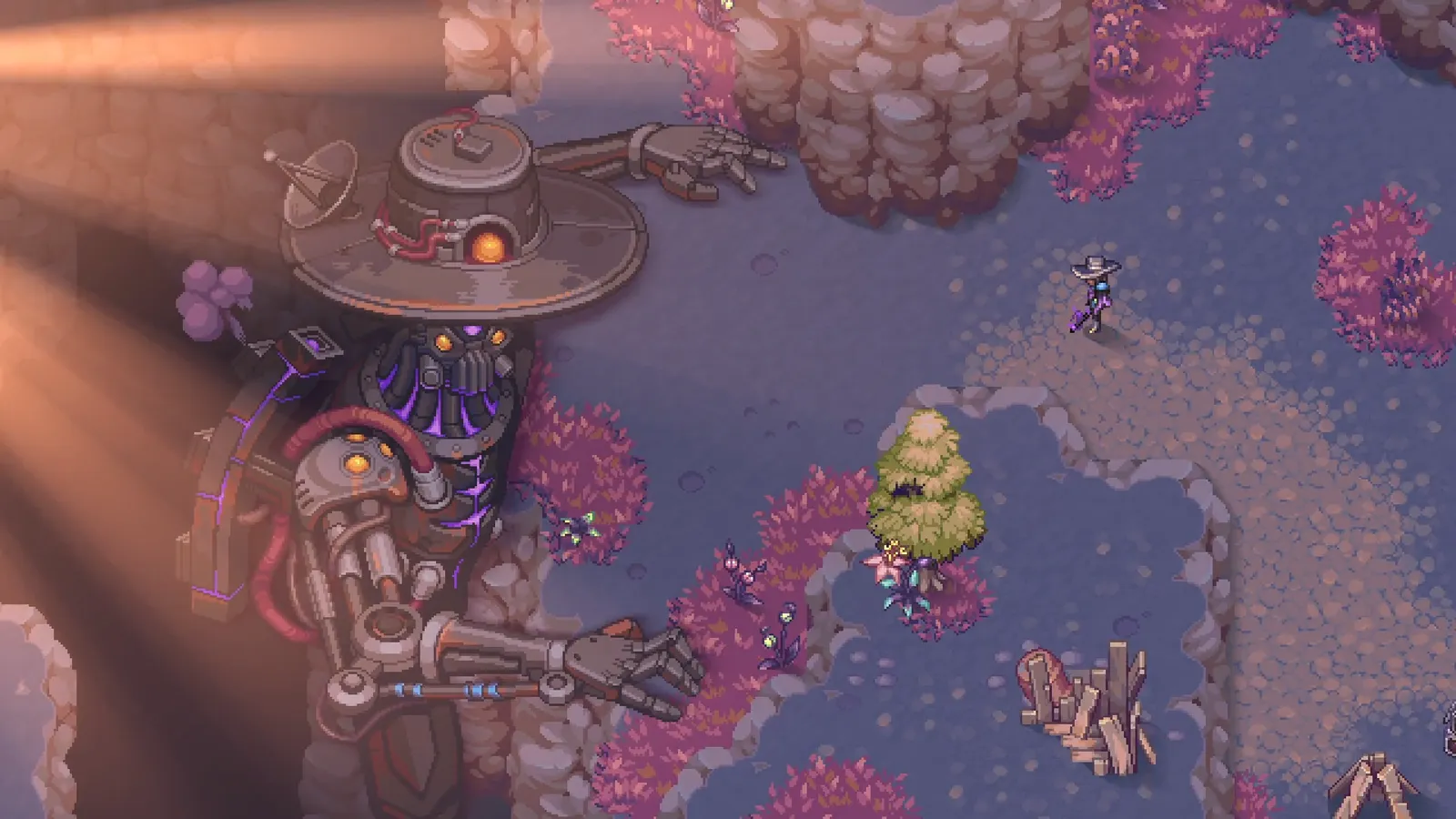
Foraging plants like these are where Fibre actually comes from. (Screenshot: Spiderware press kit)
What is Fibre?
Per the wiki, Fibre is “a Raw Material” obtained from foraging plants — specifically Hemlock, Sunbloom, Witherleaf, Frozen Shrub, and Ancient Root — “dropped at an approximately 25% rate.” That’s five separate foraging nodes feeding the same material, which makes Fibre one of the least location-dependent gathers in the game: wherever you’re foraging for something else, Fibre likely drops too.
What it feeds
Fibre’s role is Manufacturing, and the wiki documents two recipes:
| Item | Fibre needed | Other materials | Crafting station |
|---|---|---|---|
| Cloth | 2× | — | Manufacturing Table (Crafting 1+) |
| Neuron Fiber Coating | 4× | 2× Synth-Fluid | Manufacturing Table (Crafting 1+) |
Both recipes unlock at Crafting level 1, so there’s no leveling wall between picking up your first Fibre and turning it into something sellable — the whole loop is open from the moment you start foraging.
Three ways to turn Fibre into gold
- Instant Exchange, no crafting required. The wiki’s own Gold page lists Fibre by name among Instant Exchange-accepted items, and calls “Forage → Instant Exchange” its documented “Best basic method” for earning gold — “Instant Exchange converts items directly to Gold instantly. Fastest and simplest daily income source.” If you don’t want to touch a Manufacturing Table at all, this is the floor value of every Fibre you pick up.
- Craft and sell. Cloth and Neuron Fiber Coating both open at Crafting 1+, so turning raw Fibre into a Manufacturing good costs almost nothing in progression — just Synth-Fluid for the higher-tier recipe. Compare the crafted price against Instant Exchange before committing bulk Fibre either way; Pixelbay prices are “shaped dynamically by players,” so the better channel shifts.
- Stack it with any foraging contract. Because Fibre drops from five different plants, it piggybacks on whatever foraging the Pioneer’s Guild contracts already send you out for — you don’t need a Fibre-specific contract to stack up a sellable batch.
Where to farm it
The wiki doesn’t publish a dedicated Fibre node map — because it doesn’t need one. Since Fibre drops from Hemlock, Sunbloom, Witherleaf, Frozen Shrub, and Ancient Root nodes alike, any active foraging ground works, including the Virelda Outskirts documented as the early-game foraging area (see the map). Farm whichever plant you’re already after; the Fibre comes along for free.
The bigger picture
Fibre is the clearest example of Soulbound’s “everything is worth something” design: a drop you’ll get without trying, priced two ways — instant cash or a crafted good — the moment you pick it up. It’s also a natural companion to Hemlock, since the two often drop from the same foraging pass. For the other documented earning methods, see the full gold guide.